
 Back to all articles
Blogs
The True Cost of a Bad Hire for a US Tech Startup
 By Nextbridge Editorial Team
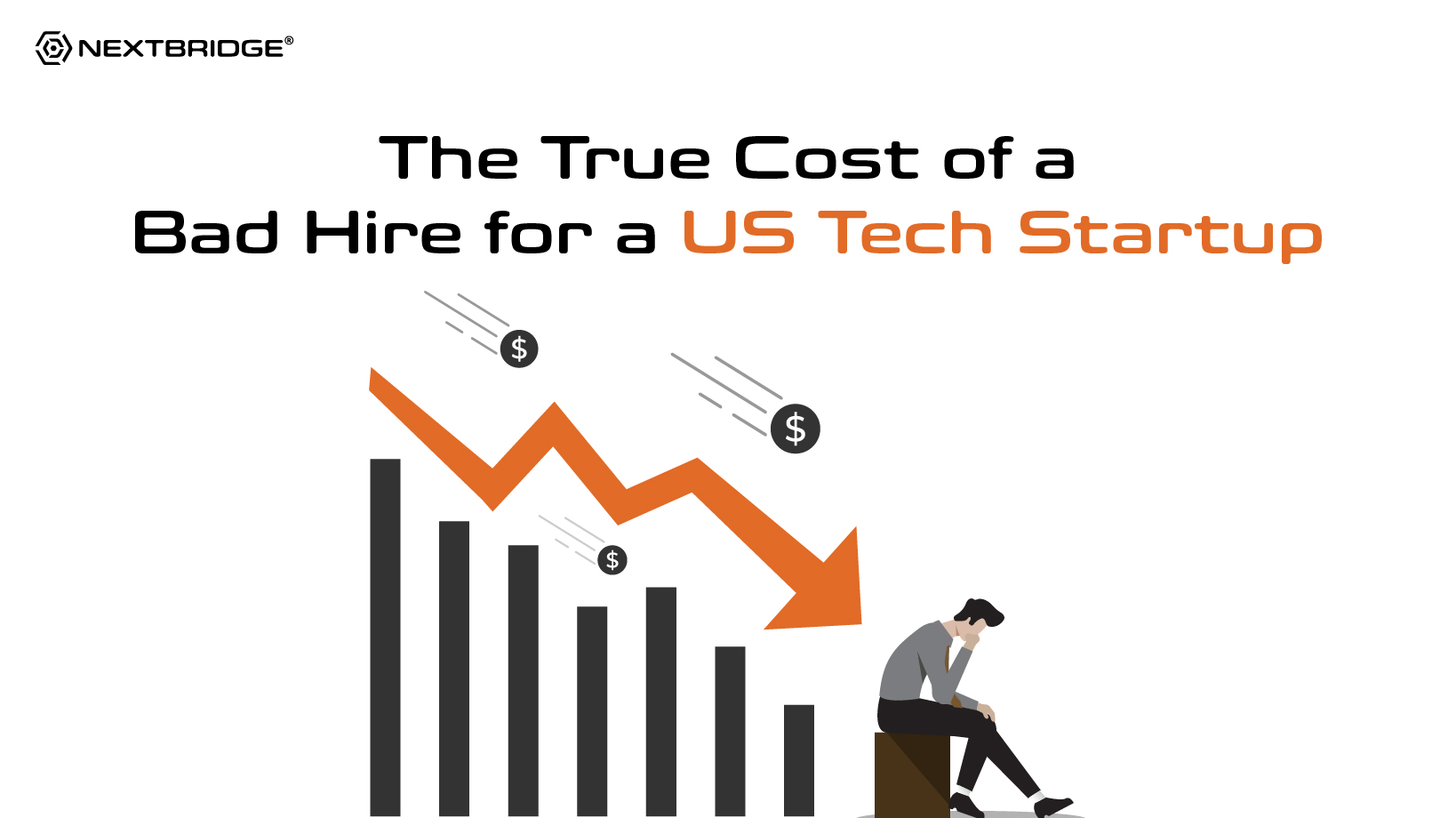
One of the biggest problems that small business owners face is hiring the right tech talent. It can make or even break their tech startup. If we specifically discuss the competitive US market, which is based on speed and innovation, the cost of bad hires is far more than you think. Hiring a single bad tech talent drains your cash flow, disrupts the work culture, and even reverses your struggles of months. Eventually, it lowers the morale of your team.
If you are running a tech startup in the USA, you may be running with a tight budget and limited time. Remember, even a single bad hire can cost you up to 30% of an employee’s salary for one whole year (U.S. Department of Labor). This is why it is important to go beyond salary while hiring new resources. In this blog, let’s see what consequences bad hires bring to the US tech companies.
How Does it Start with Bad Hires?
Let’s say a fast-growing software development company in the USA required a cloud engineer who would scale the company’s infrastructure. The resume of the candidate looked great with big names and solid experience. The candidate appeared confident in the interview. But the manager skipped the deeper technical analysis of the candidate. Instead of making a wise decision, the hiring manager made a quick decision under pressure and hired the candidate.
Six months after joining, the cloud infrastructure was nothing but a mess. The cloud engineer never had the necessary skills for automation and critical deployment. It left the whole team rushing towards fixing the costly security loops. The damage was already done, and as a result, the team felt burned out, and the projects were delayed. Additionally, the company wasted a six-figure investment in resources.

The above story is just hypothetical, but similar cases are common in many tech startups in the USA. The cost of a bad hire goes beyond inconvenience. It can bring long-lasting and expensive effects.
The True Cost of Hiring the Wrong Person
Every day of your tech start-up counts in the fast-moving industry of IT. It has drastic effects on both the company and the IT professionals. While it drains the budget and causes delays in the project delivery, it breaks the momentum of IT professionals. Hiring the tech resource must create value for both. This is why you cannot afford to hire the wrong tech employee.
Have a look at the following to understand the true cost of hiring an employee who is not fit for your tech start-up.
- Recruitment Costs
When you are hiring for your tech start-up, recruitment is the first step. It alone can cost you time and budget, especially when you do not have a proper team dedicated to talent acquisition. Posting for vacancies, checking backgrounds, and onboarding the employee, each stage demands your budget and time. If the onboarded resource does not turn out to be beneficial, all those costs add up, and you need to start all over again. You could utilize those human resources and costs on other tasks.
- Training Expenses
Once hired and onboarded, organizations invest heavily in preparing the tech resource for success. They invest in initial equipment and training while training the employee. The equipment includes gadgets like a high-quality laptop and a system setup. Set up and software licensing costs are also included.
During the first few weeks, the newly-hired employees are trained while the productivity is zero, as they are not producing any tangible output. On the other hand, the manager or team lead invests time in mentoring and training the new employees, adding to the costs. If the employee turns out to be destructive, all the investments turn into expenses, leading to nothing but loss.
- Productivity Loss
Remember the cloud engineer’s example from the beginning of the blog? Let’s proceed with it. The cloud engineer created a disaster, leading to frustration among the team members. All the other team members pick up the mess they never created and try to fix it forcefully. It creates a ripple effect that the following points reflect:
- The developers rewrite the faulty code.
- The IT team tries to fix bugs and errors that they never expected to happen.
- The project deadlines get delayed.
- The morale of the whole team drops.
- The disengagement and turnover of top employees increases.
To prevent the cost of a bad hire from affecting productivity, it is important to ensure that you hire only qualified candidates. This way, the team will not only stay focused on providing innovative solutions but also maintain the morale of top performers.

- Security Risks
Most of the tech companies have sensitive IT systems, and hiring the wrong resource can turn into a security and compliance threat. Misconfiguring the firewall, overlooking security patches, and handling software migration poorly can all occur. As a result, the company can face data breaches, regulatory fines, and damage to its reputation.
If your organization belongs to the finance or healthcare industry, compliance with security is not a choice but mandatory. The cost of bad hires in this case is far more than you imagine. It can put your entire organization at risk. If you want to ensure that your IT infrastructure remains secure, look beyond the candidate’s technical skills and ensure that he/she has knowledge and expertise in security regulation and compliance.
- Damage to Customer Relations
The cost of bad hire is not limited to internal workflows only. It also affects your customers directly or indirectly. When you hire the wrong person for a critical position, it results in the following:
- Decline in product and service quality
- Delays in delivery
- Increase in the communication gap followed by inconsistent interactions
- Decrease in trust and satisfaction
- Increase in frustration, damage to brand perception
- Decline in customer retention
If we summarize, the cost of bad recruitment impacts the long-term relationship between you and your clients that took many years of struggle to build.
How to Avoid Mis-hires
While strategic talent development can prevent the cost of a bad hire, let’s see what more you can do about it:
- Instead of relying on resumes only, focus on problem-solving skills in the real world.
- Assess the technical expertise through scenario-based tests.
- Analyze the communication skills and the ability to work as a team player.
- Do not hire blindly if you have a reference.
Conclusion
A single hiring mistake can drain the resources of your startup without producing any output. The consequences of this ripple effect are lower team morale and damage to the client's trust. To avoid the cost of a bad hire, managers in the US tech startup need to follow certain practices, and if you think: Can a bad reference cost you a job? Remember, absolutely it can.
Don't hire us right away
talk to our experts first,
Share your challenges, & then decide if we're the right fit for you! Talk to Us
Partnerships & Recognition
Commitment to excellence




-
Location
-
 United States
-
 Dubai
Dubai
-
 Pakistan
-
-
Contact us
+1 858 355 9680 511 East John Carpenter Fwy, Suite 500
IRVING, TX 75062, USAFor Business Inquiries:
sales@nextbridge.comFor Job Applications:
careers@nextbridge.com+971-558027173 208, Building A4, Digital Park
Silicon Oasis, Dubai, UAEFor Business Inquiries:
sales@nextbridge.comFor Job Applications:
careers@nextbridge.com042-35315043 / 46 427/428 G-IV Block,
M.A. Johar Town, LahoreFor Business Inquiries:
sales@nextbridge.comFor Job Applications:
careers@nextbridge.com
United States
+1 858 355 9680
511 East John Carpenter Fwy, Suite 500
IRVING, TX 75062, USA
IRVING, TX 75062, USA
For Business Inquiries:
sales@nextbridge.comFor Job Applications:
careers@nextbridge.com
Dubai
+971-558027173
208, Building A4, Digital Park
Silicon Oasis, Dubai, UAE
Silicon Oasis, Dubai, UAE
For Business Inquiries:
sales@nextbridge.comFor Job Applications:
careers@nextbridge.com
Pakistan
042-35315043 / 46
427/428 G-IV Block,
M.A. Johar Town, Lahore
M.A. Johar Town, Lahore
For Business Inquiries:
sales@nextbridge.comFor Job Applications:
careers@nextbridge.com